


Pathfinder projects
Our Pathfinder projects aim to reduce the use of storm overflows in our region. You can find out more and view our current projects here.

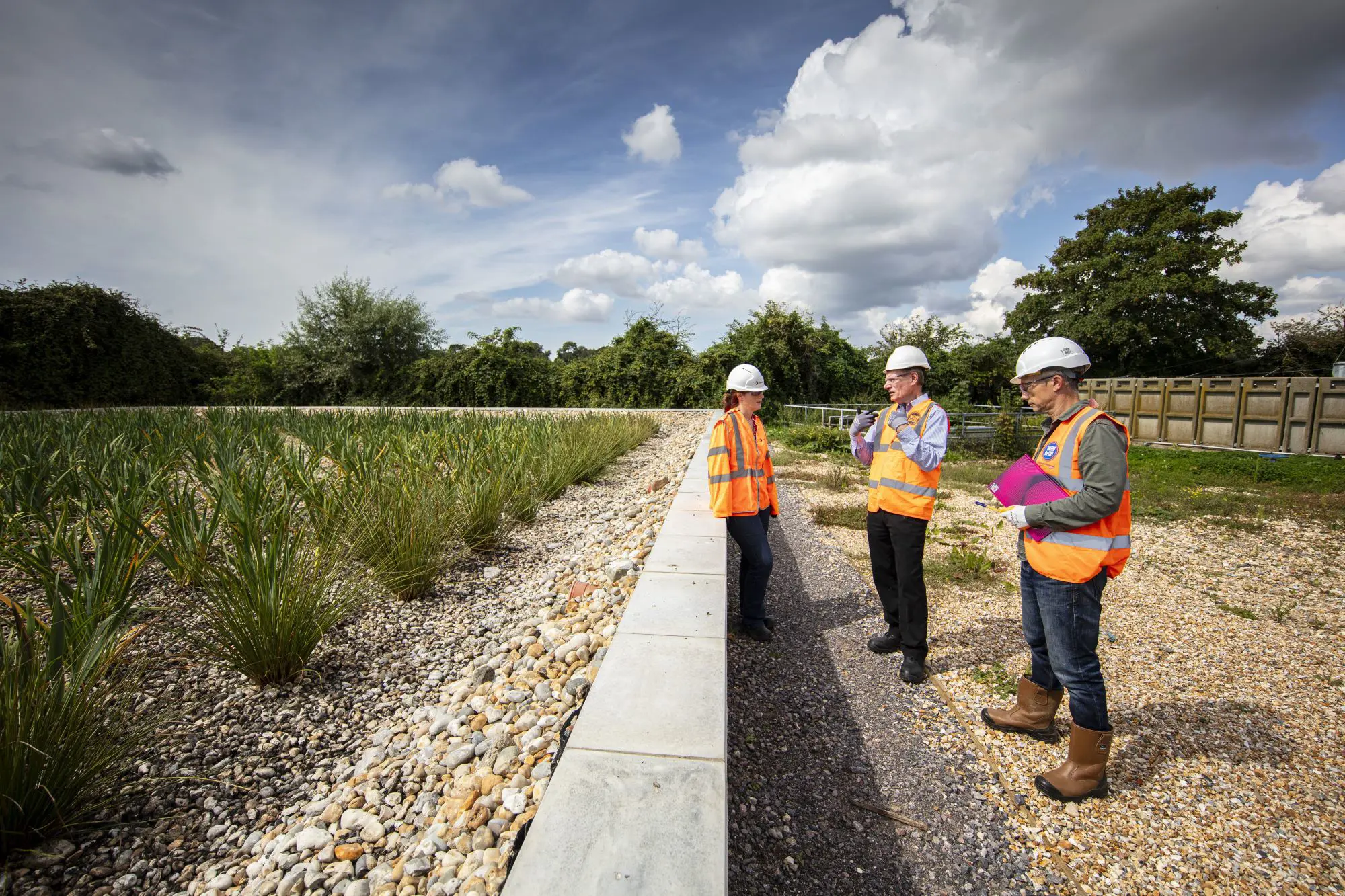
What is a Pathfinder project?
In 2023, we launched a series of Pathfinder projects. These were small, community focused schemes designed to test news ways of reducing storm overflow releases and flooding.
We set out to prove that greener solutions, like sustainable drainage systems, wetlands and better rainwater management can help reduce storm overflow releases just as effectively as traditional engineering.
Over the last two years, we’ve worked closely with residents, councils, MPs and community experts to deliver tailored plans across Kent, Sussex, Hampshire and the Isle of Wight. From improving roadside drainage to installing hundreds of slow drain water butts and building wetlands to trialling new innovative technology, we’ve been able to reduce the number of storm overflow releases right across the region.
But we’re not stopping here. Despite these projects coming to an end, we’re now taking what we’ve learnt and rolling out the most successful solutions to other areas across the South East.
What causes storm overflow releases?
Rainwater
After detailed insight and surveying of the area, we decide which solutions to roll out where rainwater is the main cause of storm overflow releases.
- Optimisation: Reconfiguring our permits and existing sites to help us reduce storm overflows releases.
- Illegal connections: Redirecting surface water that has been misconnected into the foul/combined sewer.
- Home sustainable drainage systems: Rolling out ‘slow the flow’ measures at scale on properties in our catchments
- Business sustainable drainage systems: -Targeting large roof areas with ‘slow the flow’ measures to deliver impact.
- Highway schemes: Large amounts of surface water come from public highways, influencing the design of placemaking schemes will be an essential part of the solution.
- Separating surface water: Where possible, reconnecting roof gutters and downpipes to the surface water sewer from the combined sewer.

Groundwater infiltration
Groundwater is the water found underground in the cracks and spaces in soil, sand and rock. Groundwater infiltration is when water from the ground squeezes its way into the system through underground public or private pipework.
If the system is filled with groundwater then there is less space for rain and wastewater, so the sewer system is more likely to become overwhelmed when it rains. Some of the solutions we're rolling out to reduce groundwater infiltration are:
- Relining and sealing sewers to prevent excess groundwater getting in.
- Monitoring with temperature sensors, boreholes and pipe cameras.
- Constructing wetlands to safely soak up, hold and pre-treat excess water.

Our Pathfinder projects
We've identified three key focus areas to carry out our Pathfinder projects. These areas pose complex challenges and have a higher volume of
storm overflow releases. They're also areas that need an innovative approach to tackling local wastewater treatment issues.


